
Blog
Blog

This is a subtitle for your new post

This is a subtitle for your new post

This is a subtitle for your new post

2-==Winning an Employment Tribunal Case Having just won a 5 day disability discrimination and unfair dismissal case which we picked up 3 days before the hearing and in the face of a costs warning from the respondent’s solici60 we thought it worth-while sharing some lessons on winning at the Employment Tribunal. Our client had suffered with a long term health condition which meant she could not safely attend work but she argued that she should be allowed to work from home as a reasonable adjustment. The employer had dismissed her after deciding the job could only be done at the workplace and they had failed to find her an alternative (home based) job during a 3 month redeployment period. The respondent’s solicitor understandably invited the claimant to withdraw her claim on the basis that it was accepted that she could not work on site and no jobs had emerged during redeployment. So a hopeless case? Not quite. In preparing the case for hearing (which entails reviewing every document in the bundle) we noted that the dismissal letter failed to advise of a right of appeal and another letter from the employer had promised that the redeployment period could be extended if need be. We were able to draw these issues out during cross examination of the dismissing manager and the client won her claims. She now awaits a remedy hearing. What lessons emerge from this case? Review the list of issues The tribunal will make its decisions based on the list of issues agreed at a prior Case Management Discussion so it is sensible to review them and ensure they have been addressed in your evidence. The fairness of the dismissal and requested extension to redeployment were among the list of issues in this case so we were alive to them in reviewing the bundle. Pay attention to the detail Only by careful scrutiny of each document in the bundle did we uncover flaws in the respondent’s case which led to victory for the claimant. It is easy to be intimidated by the respondent’s solicitor demanding that the claimant withdraws their claim(s) and threatening a costs warning. They may or may not have a valid argument but the documents need to be carefully reviewed to see if there are any points in the claimant’s favour which could either facilitate settlement or even lead to a successful claim at the tribunal hearing. Gather the relevant evidence- even late evidence Tribunals are evidence led. As such their decisions are usually based on the evidence in the bundle as well as witness evidence (although where witness evidence conflicts the tribunal will need to decide who to believe). By the time of any hearing the tribunal would have (and had in this case) issued directions for the disclosure of evidence. However the tribunal retains a discretion to admit late evidence and will usually do so if it is relevant to the issues and will also consider whether the other side objects to the late evidence being admitted. In reviewing the bundle we identified references to relevant documents not in the bundle which were of assistance to our case and we were able to have them admitted during the hearing. The additional evidence helped the claimant’s case. So if you are a claimant facing a tribunal hearing (and you may or may not have a costs warning against you) don’t panic. All may not be lost and it is worth getting an objective assessment of your case to see if a favourable settlement can be achieved or even if it is worth fighting the case. Of course your adviser might agree with the respondent solicitor that your case is weak but at least you would come to that conclusion based on a professional unbiased assessment of your case and not based on fear and intimidation from a respondent’s solicitor. It is also our ex experience that even a weak claim can be settled if it is even t7o save the respondent incurring the substantial legal costs of defending the claim. If you are in receipt of a sanction from Companies House for failing to comply with your legal obligations as an overseas entity, please call us today on 020 8858 5996 or email Winston Brown at: Winston.brown@brownandcosolicitors.co.uk and we would be happy to assist. *
This is a subtitle for your new post
Enforcement by Companies House against Overseas Entities

Marry in Haste?

If you have been charged with running an HMO without a license you may find yourself being prosecuted for running an HMO without a license. The offence arises under section 72 (1) Housing Act 2004 which makes it an offence for a person ‘having control of’ or ‘managing’ an HMO which is required to be licensed which and does not have it licensed. There are possible defences under section 72 (5) of the Act namely: the person has requested an exemption notice from the council. Where a householder wishes to take steps which would mean the property is no longer an HMO the council can grant an exemption notice of up to 3 months from the requirement to be licensed. the person charged has applied for a license to the council and their application is under consideration the person had a ‘reasonable excuse’ for not having licensed the property A person convicted of running an HMO without a license faces an unlimited fine. As an alternative to prosecution councils can impose fines. If you have been charged with having an HMO without a license it is important that you obtain independent legal advice to establish if any defences may be open to you. If matters are at an early stage your solicitor may also be able to negotiate a less draconian way forward with the council. The solicitor should also consider the more fundamental question whether your property is an HMO at all (for which there are specific statutory definitions) and which if any of the licensing regimes apply to your property. The law in this area is sufficiently complex that it is worth getting accurate advice to explore a way forward. Brown and Co Solicitors acts for landlords across the UK in housing relates matters including prosecution for HMO offences. If you require legal advice or assistance please call us today on 020 8858 5996
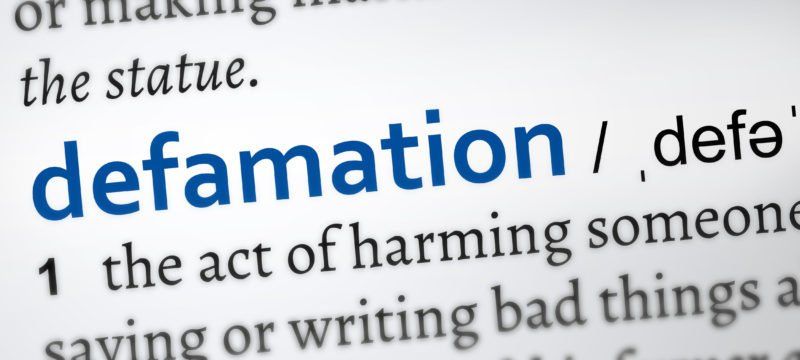
What is Defamation in the UK? We are often asked this question. The newspapers are full of stories about people being sued for what they have been said, or written. It can lead one to think that simply having your feelings hurt by another person’s words is enough to sue them. Not so. Here I attempt to clear the often-muddied definitions of defamation. Defamation occurs when an untrue statement is published which lowers the opinion of a person in the minds of right thinking members of society. It is governed by both statute law and common law in the UK, with the Defamation Act (2013) being a key piece of legislation. Defamation is a term which covers two types of acts: Libel This is where the defamatory statement has been made in written form. The statement must contain a false statement of fact. Comments of opinion, however disparaging, are usually not actionable. Slander This is where the defamatory statement is made in verbally. As an additional requirement, a person complaining of defamation by slander must show that they have suffered special damage arising from the slanderous comments. As with the above, the statement must contain a false claim of fact. For a statement to be regarded as slanderous, special damage must be proven. Is Defamation a crime? Defamation in a tort, not a criminal offence. A tort is a civil wrong covered by common law. Victims of such actions are able to take redress by sueing the defamer. It is up to the judge to decide whether, in the natural and ordinary meaning, the words published would cause the claimed harm to the victim’s reputation. The judge will further decide whether the remedies claimed are proportionate. How could I prove defamation has occurred? Do I have a case? If it is written, one would need to produce the comments. What would a normal person think? Is this the natural and objective meaning of the statement? Is the statement true? If yes, no civil wrong was committed. Did special damage result (in the case of slander) Knowing whether you have a case will depend on being able to prove its impact on right thinking members of society and whether any statutory defenses apply. There is a strict time limit of 12 months to bring a claim. Therefore we recommend you seek legal advice as soon as possible. Pre-action protocol Pre-action Protocol outlines the steps that should be taken by parties in a defamation dispute. These steps are designed to help both sides come to a resolution, preferably without the need for litigation (court action). The Court can penalise any party failing to follow the protocol with costs. In the event that litigation ensues, the court will expect the parties to have exchanged enough information to understand their respective positions, Give us a call on 020 8858 5996 or email here: winston.brown@brownandcosolicitors.co.uk Further, more detailed information can be found here: https://www.justice.gov.uk/courts/procedure-rules/civil/rules/pd_pre-action_conduct

Short answer: Yes you can, but you will need to follow certain rules to ensure you are doing so legally. Do I need a licence to sell alcohol online? Yes, you would need to apply in the same was as a pub or restaurant. Licensing for alcohol sales is based on the place or storage, Wherever alcoholic drinks are to be kept, those premises must be licensed for that purpose. The point of sale is the key to determining which premises are licensable. Due to the often complex nature of this definition, we would offer this advice on a case-by-case basis. How long does it take to get an alcohol licence? The licensing process is relatively quick, and having a background in local authority law, Brown and Co are ideally placed to help you get your application through smoothly. In total, we expect to take 5-6 six weeks. Once we submit your application, there will be a 28-day consultation period, during which parties, including the police, have the opportunity to express any significant reasons to deny the application. If you are selling online, there are a number of considerations which are unique to online sales of alcohol. One such consideration is the measures which the applicant (you) proposes to ensure the alcohol is not sold (or eventually delivered) to someone who is underage. There are a number of other similar conditions which the applicant must consider. Internet based sales have very specific regulations. Our Process at Brown and Co includes: Taking your details and onboarding you as a client Recording application information and details of the Licensee Assigning Designated Premises Supervisor (legal responsibility) Completing the application Proposed conditions – we use our extensive expertise to set-out how we will meet the license objectives. Negotiation with objectors during the consultation period. Licensing committee hearing – we represent. How much does an alcohol license cost? Costs for alcohol licence depends on the rateable value of the property. An indication of our fees can be found below, but offer a guide only. Advertising tin the local newspaper:£150 – £250+VAT Our fees: £750+VAT Appeal against refusal of first application, of variance or revocation of existing license: £1000 – £1500+VAT We have an excellent record in working with Local Authorities to secure premises licences. For more information, call us now on 020 8858 5996

Business Hours
- Mon - Fri
- -
- Sat - Sun
- Closed
Brown and Co Solicitors is authorised and regulated by the Solicitors Regulation Authority. Our Solicitors Regulation Authority (SRA) number is 562128
© 2024. The content on this website is owned by us and our licensors. Do not copy any content (including images) without our consent.